Zum Inhalt

Datalab Blog

New Rate Limits for Aqueduct: More Room for Bursts, a Cap on Marathons

Since Monday, 9 November 2026, Aqueduct has new rate limits. You can now send twice as many requests per minute as before, and there is a new hourly and daily limit on top. We did not pick these numbers out of thin air: we went through a week of Aqueduct's request log first. This post shows what we found and what the new limits mean for your work.
Agentic One Pager

My take on the current state and future of agentic coding — condensed onto a single page.

Projektübersicht: MCP-Server für Microsoft SharePoint (PoC)

This is our first guest blog post by our colleague Andreas Klauda from E020-05. In this detailed post he describes how he successfully used Aqueduct with a local stack to increase his teams productivity by integrating his own MCP server to transform SharePoint into an agentic knowledge base.

German only:

Increasing your organization sovereignty with open source software: a three step approach

open source is growing everywhere

Open source is rising like the wind: from its academical beginning in Berkeley and Massachusetts in the 1970s, it slowly reached mass usage in the datacenter and on consumer devices in the 2000s. Already in the 2010s, infrastructure market analysts noted that the open source licensing model was dominant in IT Infrastructure products coming to the market: easily available without central procurement, source code access to understand the internals if needed, and of course, gratis ! Today most of the open source infrastructure software is contributed by large companies, Intel, Red Hat (IBM), Google, Meta and Suse being the 2025 top five Linux kernel contributors

Aqueduct Turns 1 🥳

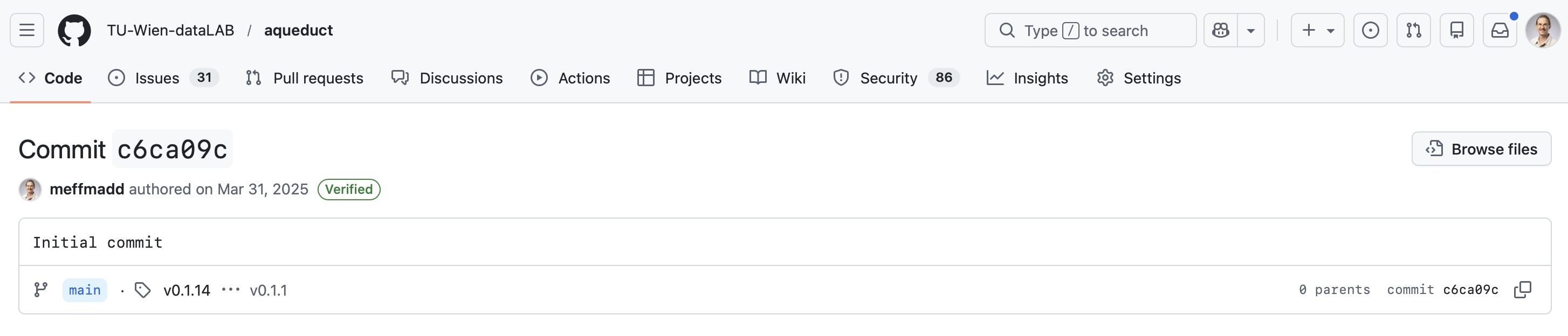
Initial commit
Blast from the past.

Today exactly 1 year ago - on March 31, 2025 - we pushed the first commit to Aqueduct. Aptly named "Initial commit". Since then a lot has happened and we wanted to reflect on the progress, the current state and the future plans (the backlog only grows longer and longer).